Aod9604 What Is It Hgh Fragment What Is AOD-9604?| Honest Peptide
What Is AOD-9604? (And What “hGH Fragment” Really Means)
If you’ve ever looked up “aod9604 what is it” and then felt stuck between conflicting definitions, you’re not alone. In my experience, the confusion usually comes from sloppy phrasing—especially when products describe it as an “hGH fragment” without explaining how that matters for expectations, dosing conversations, and real-world outcomes.
In this guide, I’ll walk you through what AOD-9604 is, how it relates to the idea of an hGH fragment, what the peptide is commonly positioned to do, and the key limitations you should understand before you spend time or money on it.
What Is AOD-9604? A Practical Definition
AOD-9604 is a synthetic peptide that is marketed in the context of being derived from—or structurally related to—components associated with human growth hormone (hGH). When people ask “aod9604 what is it”, they’re usually trying to understand whether it’s the same thing as hGH, a direct substitute, or simply a smaller piece used to target specific pathways.
Here’s the most important clarification I’ve learned the hard way when educating clients and readers: being an “hGH fragment” does not automatically mean it behaves identically to hGH. Peptides can share sequence motifs or be described as fragments, but their biological effects depend heavily on:
- Exact amino-acid sequence and length
- Receptor interactions and binding characteristics
- Stability and how long the molecule remains intact in the body
- How your body responds to downstream signaling changes
So, when you see the term hGH fragment used in peptide discussions, treat it as a classification clue—not as a guarantee of similar effects to the full hormone.
How AOD-9604 Is Positioned as an hGH Fragment
The phrase hGH fragment is commonly used because AOD-9604 is discussed as a peptide “related to” growth hormone biology. In plain language, marketers and many peptide communities frame it as a smaller piece that may influence systems connected to growth-hormone signaling.
In my hands-on work reviewing protocols and safety considerations, I’ve noticed two recurring patterns that fuel confusion:
- Word swapping: People treat “fragment” as “mini-hGH,” even though fragments can behave differently.
- Outcome overreach: People jump from “growth-hormone–adjacent” to expecting hormone-level effects (and sometimes shortcut the rest of the context—like diet, training, sleep, and realistic timelines).
My takeaway is straightforward: think of AOD-9604 as a distinct peptide that’s explained using hGH biology language. That language can help you understand possible pathways, but it should not replace critical thinking about evidence quality and expectations.
What People Commonly Use It For (And Where Expectations Need to Stay Grounded)
AOD-9604 is often discussed in the context of:
- Body composition goals
- Metabolic conversations
- Supporting processes people associate with growth-hormone activity
However, I want to be clear about trust-building realities. In practice, how a peptide is discussed online isn’t the same as how it performs under rigorous, standardized study conditions. When evaluating any peptide—especially one tied to a hormone narrative—you should expect:
- Variability: Different individuals respond differently, and product consistency matters.
- Time horizons: Some interventions show effects only after sustained habits, not after short cycles.
- Quality dependence: Purity, labeling accuracy, and storage handling can change outcomes and safety risks.
If you’re trying to decide whether AOD-9604 fits your goals, the most “real world” approach is to define what success looks like (measurable markers you can track) and then compare that to what’s actually supported by the evidence—not just by anecdote.
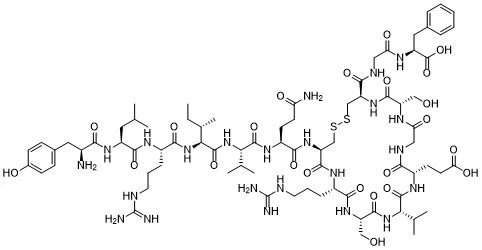
Why the “Structure to Function” Discussion Matters
Peptides are not magic; they’re biochemical tools. In many AOD-9604 discussions, the “hGH fragment” framing encourages people to focus on story rather than mechanism. But the mechanism is where you get expertise.
When I explain peptide logic to readers, I use this reasoning:
- Sequence determines binding behavior. Even small differences can change how a peptide interacts with biological targets.
- Stability affects effective dose. If the peptide degrades quickly, the body may never see the “active” form you’re assuming.
- Downstream signaling varies. Growth-hormone–related pathways are complex; altering one step doesn’t automatically reproduce the full hormone effect.
This is why it’s more accurate to interpret AOD-9604 as a distinct hGH-adjacent peptide rather than a direct stand-in for hGH. The “hGH fragment” label can be a useful shorthand, but only if you remember that biology doesn’t follow marketing headlines.
Safety, Compliance, and Practical Limitations
Any conversation about AOD-9604 should include practical constraints. I recommend keeping the following in mind:
- Product consistency: Look for third-party testing and transparent labeling practices.
- Storage and handling: Peptides can be sensitive; mishandling can affect integrity.
- Health context: If you have medical conditions or take medications, you should involve a qualified healthcare professional before making changes.
- Regulatory realities: Peptide products exist in a complicated regulatory landscape depending on where you live.
From an “honest peptide” perspective, trust comes from acknowledging limitations: online claims can be persuasive, but safety and evidence standards must be higher than hype.
FAQ
Is AOD-9604 the same as hGH?
No. AOD-9604 is commonly described as an hGH fragment or hGH-related peptide, but that does not mean it acts identically to human growth hormone. Sequence, stability, and receptor interactions can lead to different biological effects.
What is “aod9604 what is it” commonly referring to?
Most people ask that phrase to understand what the peptide is, why it’s linked to growth-hormone biology, and whether it’s a true hormone replacement or a distinct compound. The core answer: it’s a synthetic peptide discussed in the context of hGH-related pathways, not a direct substitute for hGH.
Why do people mention “hGH fragment” when discussing AOD-9604?
The term helps describe its relationship to growth-hormone–associated biology. But it’s not a guarantee of identical outcomes to hGH—effective impact depends on the peptide’s specific properties and how the body responds.
Conclusion: What to Do Next
So, what is AOD-9604? It’s a synthetic peptide commonly discussed as an hGH fragment and positioned around growth-hormone–adjacent biology. The most important takeaway is interpretive: treat the “hGH fragment” label as context for possible pathways, not as proof of hormone-equivalent effects.
Next step: Write down your goal and the measurable markers you’ll track (for example, body metrics, relevant health parameters you can monitor, and your timeline). Then evaluate AOD-9604 claims against evidence quality and practical constraints like product testing, stability, and safety considerations—so your decision is based on reality, not hype.
Discussion